The War With Iran Opens New Market Possibilities for Ukraine’s Drone Technology
With Trump skimping on supplies to Ukraine, Zelenskyy is setting up his own deal with the Gulf.
Peyman Pejman·
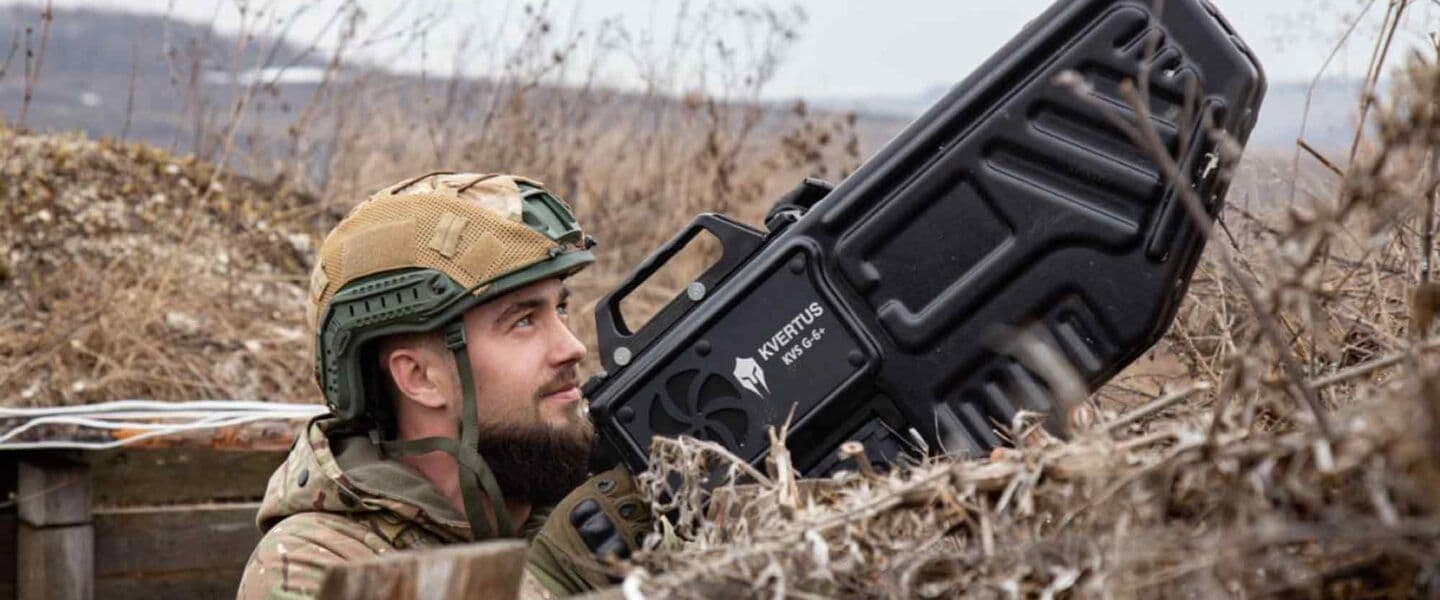

With Trump skimping on supplies to Ukraine, Zelenskyy is setting up his own deal with the Gulf.
This article was first published by WhoWhatWhy, a Global Geneva content partner.
Ukrainian President Volodymyr Zelenskyy has been negotiating defense deals with Gulf allies to obtain US-made Patriot missiles in exchange for Ukrainian drone technology, which is increasingly needed to boost the defense infrastructure of Gulf countries.
Negotiations concerning the drones-for-Patriot exchange are in their early stages, and it is not certain Gulf countries will eventually agree to the deal. If they do, the move would constitute Zelenskyy’s boldest effort so far to bypass US arms transfers and inject much-needed cash into Ukraine’s ailing economy. The transfer of antiballistic Patriot missiles would still require US authorization.
Ukraine’s offer of drone technology to Gulf states has previously been reported, but until now, its efforts to obtain Patriot missiles in exchange for the technology have been kept under wraps, according to Gulf- and Europe-based Ukrainian analysts.
“Ukraine has received 11 requests from the United States, European countries, and Iran’s neighbors to assist with antiballistic missiles,” says Oksana Mitrofanova, senior researcher at the Institute of World History in France. “Ukrainian teams are already negotiating multimillion-dollar contracts in Gulf countries.”
“Zelenskyy has said that Ukraine would like to quietly obtain [Patriot] missiles from the Gulf and give them [antidrone] interceptors in exchange. It is a very sensitive issue, and the government does not want to speak about it publicly,” she added.
A source with government connections in the Gulf confirmed that Ukrainian delegations have raised the subject but added the talks are in their infancy.
“They have brought it up and said they would be interested. They have phrased it like, ‘It is very important to us. We are going to do our best for you. Can we think in broader defense cooperation and not just drone-for-cash?’” said the source, who asked not to be named because he was not authorized to speak on behalf of his government.
All Gulf countries currently under attack by Iran — Saudi Arabia, United Arab Emirates (UAE), Qatar, and Kuwait — have US-made Patriot missiles. By law, they would need US permission to transfer them to Ukraine.
There is a recent precedent for such transfers to Ukraine, however. Last year, the Trump administration allowed Patriot and other arms transfers from NATO countries to Ukraine. Under the Prioritized Ukraine Requirements List (PURL), NATO countries paid the Pentagon for US-made arms — including Patriot missiles — and transferred them to Ukraine.
“Gulf countries understand that red lines have been crossed, and they want to be prepared for the future.”
According to Samriddhi Vij, a geopolitics associate fellow at the UAE-based Observer Research Foundation (ORF) Middle East, the Ukrainian proposal offers both advantages and risks for Gulf countries.
On the positive side, she said, obtaining Ukraine’s antiballistic drone technology fits the requirements of the Gulf countries’ future security infrastructure.
“What this conflict has taught the world is that normal calculations have changed. UAE is Iran’s second-largest trade partner, and ordinarily you would not have expected Iran to be attacking the UAE,” she said.
“Gulf countries understand that red lines have been crossed, and they want to be prepared for the future,” she added.
On the other hand, she said, Gulf countries might hesitate to increase regional instability by directly or indirectly helping Ukraine in its war with Russia.
“I think Gulf countries would want to move cautiously on this. They already feel that they have gotten involved in a conflict that they did not start, but they are receiving the majority of the attacks,” Vij said. “So they would not want to enter into another conflict by supplying Patriot missiles to Ukraine. I would think that they would be cautious and want to balance their interest with the geopolitical interests.”
Russia and Iran have close ties and any overt moves to weaken Russia might lead to further aggression in the region with Iran acting as a proxy for Russia.
Ukraine’s effort to open a direct supply channel for Patriot missiles has become a necessity since the Trump administration recently balked at providing Ukraine with more missiles. Even if the Patriot part deal falls through, the overtures to the Gulf could still bring Ukraine much-needed cash.
The Kyiv Independent recently reported Ukrainian defense sources had revealed that “a Saudi Arabian arms company has signed a deal to buy Ukrainian-made [drone] interceptor missiles.” The newspaper added that a separate “huge deal” for arms is also being negotiated.
Addressing the UK Parliament on March 17, Zelenskyy said Ukraine has already sent more than 200 specialists to the Gulf to help with interceptor technology, including drone sensors and radar.
A Shahed-136 drone at the Islamic Revolutionary Guard Corps Aerospace Force achievements exhibition in the garden of the Museum of the Islamic Revolution and Holy Defense in Qom. The exhibition, titled Sky of Power, opened on March 13, 2023..Photo credit: Mohammadreza Jabbari / Wikimedia (CC BY 4.0)
“We are capable of producing at least 2,000 effective and combat-proven interceptors every day,” Zelenskyy told Parliament. “We can produce more — it depends on investment. We need about 1,000 interceptors a day, and we can supply at least another 1,000 a day to our allies.”
While Gulf countries currently use Patriot and Terminal High Altitude Area Defense (THAAD) systems, they are expensive — a Patriot system can cost around $4 million per shot — whereas Iranian-made Shahed drones cost $25,000-$50,000. Ukrainian drone interceptors cost about $3,000.
In addition to direct arms supplies, Ukraine needs cash infusions to run the government and pay for the war.
Ukraine’s 2026 budget is estimated at around $112 billion. About 60 percent of that amount is spent on the war with Russia. The Ukrainian government was about to run out of money before the European Union agreed to lend Kyiv 90 billion euros ($104 billion) over the next two years. Kyiv expects to receive the first payment next month.
Ukraine is also investing hugely in defense technologies, in partnership with a number of European countries. The hope is innovation will bring down costs and increase military success.
Peyman is an American journalist and writer, who has also served as a UN communications officer. He is author of two current affairs fictions: The Age of Intolerance and The Misfit Radical.

Trump's "shock and awe" has decentralized Iran's command structure; as a result, one faction may sue for peace while another opts to continue fighting.
Read more →
The Trump administration's decision to close one of South Asia's most crucial consulates represents a failure to grasp the importance of being in touch.
Read more →